Hey Duggee: We Love Animals
- 4.1
- Rating
- 10.00K
- Installs
- $2.99
- Price
 Analysis by App-foxy
I approached Hey Duggee: We Love Animals as a short, friendly learning game rather than a traditional adventure title, and that distinction matters. It is built around the cheerful world of Hey Duggee, with a simple idea at its center: children learn about caring for animals by taking part themselves. My overall impression is positive, especially for younger players who enjoy familiar characters and need an inviting first step into educational play. It is gentle, accessible, and easy to understand, although adults looking for a deep or long-lasting game will probably find it limited.
The game sits in the educational category and comes from BBC Studios Distribution Ltd. It is rated Everyone, which fits its approachable tone and child-friendly subject. Its average rating is 4.1 from around 57 ratings, and it has passed the 10K+ install mark. Those figures suggest a modest but established audience rather than a huge mainstream release. The price is $2.99, so I would judge it less like a free distraction and more like a small, focused activity that needs to earn its place on a family device.
Learning through small animal-care activities
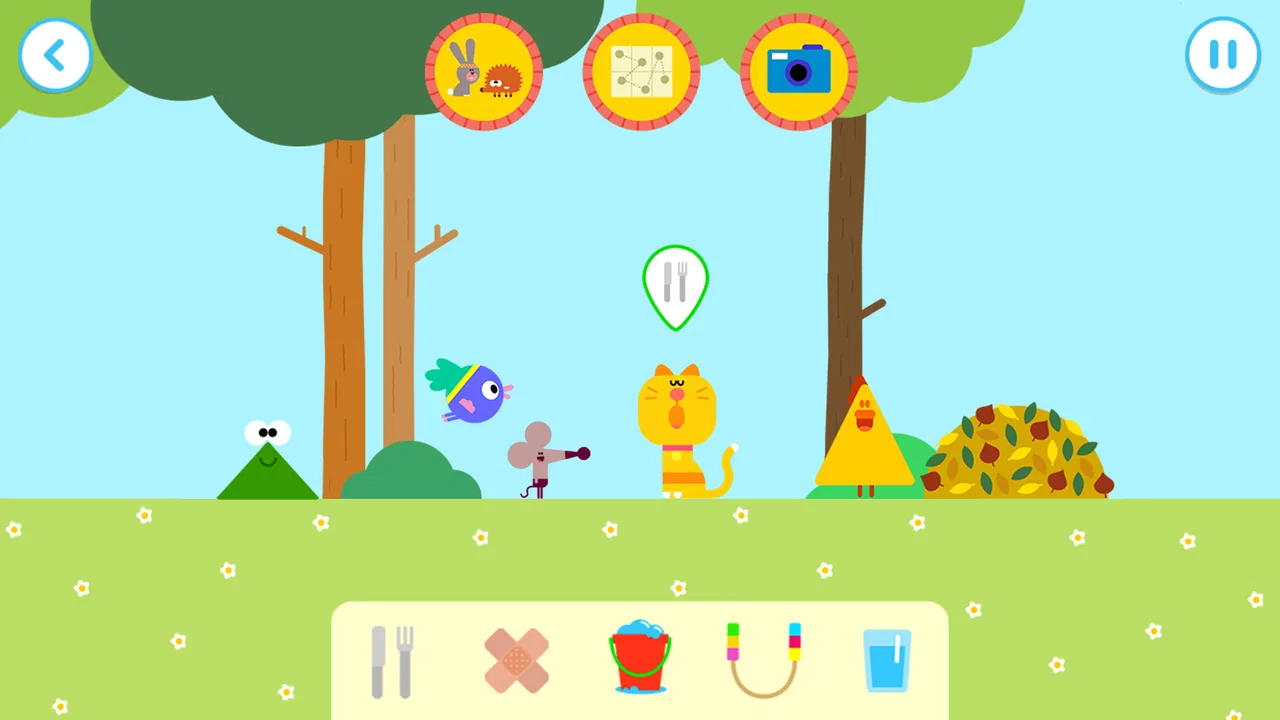
The strongest part of the experience is how naturally it turns the animal-care theme into play. Instead of asking a child to absorb a lesson through long explanations, the game places the player in the role of someone who has to notice, respond, and look after creatures. That makes the subject feel active. A child is not simply watching the Squirrels learn; they are invited to participate in the same general idea.
You May Also Like

 Pandora - Music & Podcasts
Pandora’s Music Is Easy to Start, but Harder to Recover
Pandora’s strength is its low-effort path from a seed to a station. Its weak spot is how much confidence it asks you to place in connection, setup, and quiet recovery.

 8 Ball Pool
 Is Built on Rivalries, Rematches, and Routine
A close look at the rivalries, rematches, shared routines, and unanswered safety questions that turn a quick pool match into a persistent mobile community.

 Samsung Music
’s Quiet Strength Is Playing What You Already Own
Its reach comes less from spectacle than from dependable access to a personal library. That simplicity is both the app’s strongest retention engine and its ceiling.

 AccuWeather: Weather Radar
AccuWeather Review: A Quick, Clear Forecast for Everyday Decisions
For everyday plans, the best forecast is the one you can understand quickly. AccuWeather makes rain timing, radar, and local conditions easy to act on, with a few trade-offs.

 Hill Climb Racing
Why Hill Climb Racing Still Turns Crashes Into One More Run
A tiny car, a bumpy hill and one more upgrade: Hill Climb Racing keeps resurfacing because its simple chaos makes every near-miss feel personal.

 AliExpress - Shopping App
AliExpress Makes Global Shopping Feel Personal, but Shoppers Bear the Risk
AliExpress turns a global marketplace into a pocket-sized discovery engine. Its reach is useful, its shopping loop compelling, and its trade-offs easy to miss.
More From Our News Desk
View All News


That approach works particularly well for children who lose interest when an educational app feels like a worksheet. The Hey Duggee setting gives the activity an emotional entry point, while the animal theme supplies a clear reason to keep going. In my experience, a familiar character can make a child more willing to try an unfamiliar task, and this game uses that advantage without making the educational purpose feel overly formal.
I also like the fact that the central subject is broader than identifying animals. Caring for an animal encourages children to think about attention, responsibility, and gentle behavior. Those are useful ideas for a parent to reinforce away from the screen. After a play session, it is easy to continue the conversation by asking what the animal needed, why it needed help, or how a real pet should be treated. That gives the game more value than an activity that ends as soon as the device is put down.
The interface is designed for young users, so the basic interaction is more important than speed or precision. That is a good choice for this audience. A preschool-age player should not have to manage complicated menus, remember elaborate rules, or compete against a timer just to reach the learning material. The game’s appeal comes from making participation feel safe and manageable.
One useful way to use it is as a short transition activity. I would not hand it to a child expecting it to occupy an entire afternoon. It fits better before bedtime, during a quiet break, or while an adult is preparing a meal nearby. The theme gives the child something constructive to do, but the experience remains light enough that it does not demand the same commitment as a full game.
Why the familiar setting helps
For children who already know Hey Duggee, the connection to the show is likely to be the quickest reason to try the game. Familiarity reduces the effort needed to understand the tone. The child already recognizes that this is meant to be playful and encouraging, so the animal-care activities can begin without a long introduction.
That does not mean the game is only suitable for existing fans. A child who has never watched the show can still understand the basic appeal of animals and helping them. However, fans will probably get more immediate enjoyment from the characters and presentation. This is one of the first trade-offs I noticed: the recognizable setting strengthens the emotional connection, but it also means the game is aimed at a fairly specific age and interest group.
Parents can turn that familiarity into a learning routine. Rather than treating the app as a reward that is separate from everyday life, I would use it as a starting point for simple questions about real animals. A visit to a park, a trip to a pet shop, or even looking at birds outside can become a follow-up activity. The game works best when it opens that conversation instead of replacing it.
Another practical advantage is that the subject is easy to explain. If a child asks what the game is about, an adult can answer in ordinary language: it is about learning to look after animals. That clarity helps parents decide quickly whether it matches the child’s interests. There is no need to understand a complicated fictional world before deciding whether it is appropriate.
Where the experience feels less convincing
The main limitation is depth. This is a focused educational game, not a large collection of challenges with a long progression system. A child who enjoys repeating the same type of activity may be happy to return, but children who expect constant novelty could move on quickly. The $2.99 price is reasonable for a small, purpose-built experience, yet it may feel less attractive if a family is specifically searching for a game with many hours of replay.
I would also be careful about expecting it to teach animal care in a complete or practical sense. It can introduce ideas about looking after animals, but it should not be treated as a substitute for real guidance from a parent or teacher. Children still need adults to explain that different animals have different needs and that real pets require ongoing work, patience, and responsibility. The game can support that lesson; it cannot carry all of it by itself.
Its simplicity is both a strength and a weakness. Young players benefit from straightforward interaction, but older children may find the experience too easy. If a child is already comfortable with more complex educational games, the gentle structure may not offer enough challenge. In that case, an app focused on puzzles, reading, mathematics, or science experiments could provide better long-term engagement.
I would also avoid presenting it as a competitive game. The appeal is not winning against another player or mastering difficult mechanics. It is better understood as guided, character-led activity. That makes it suitable for a calm session, but less suitable for a child who wants excitement, fast decisions, or a clear sense of achievement through increasingly difficult levels.
One point worth considering is adult involvement. The game is accessible enough for a child to explore, but the best educational value comes when an adult occasionally joins in or talks afterward. A parent does not need to sit beside the child for every moment, yet a little conversation can turn a short digital activity into a more meaningful lesson. Families looking for a completely hands-off learning tool may not get as much from it.
How I would use it at home
Imagine a child coming home from nursery in the afternoon and asking for screen time while a parent needs ten quiet minutes. This game is a sensible choice for that situation because its purpose is easy to understand and its animal theme is naturally gentle. I would let the child play for a short, agreed period, then ask them to describe what they did to help the animals. That final question is important: it encourages the child to remember the idea rather than simply the tapping and movement.
For a younger child, I would play alongside them the first time. Not because the game is difficult, but because the child may focus on the characters and miss the caring message. An adult can point out what is happening and connect it to real life without turning the session into a lesson. “What do you think this animal needs?” is more useful than immediately giving the answer.
The game could also work well as part of a themed day. After playing, a family might read an animal story, draw a favorite creature, or observe wildlife from a window. That kind of sequence makes the app feel like one activity in a larger learning experience. On its own, it is pleasant; combined with conversation and offline play, it becomes more memorable.
I would not use it as a reward for finishing chores if the goal is to teach responsibility through real action. Looking after a pet, watering plants, or helping with a small household task gives a child a different kind of understanding. The game is better used to introduce or reinforce the idea, not to stand in for hands-on responsibility.
Who should choose it, and who should look elsewhere
I think this is a good fit for preschool and early-primary children who enjoy Hey Duggee, animals, and uncomplicated educational activities. It is especially appealing for parents who want a screen experience with a clear positive theme rather than an app built around pressure, competition, or endless rewards. The Everyone rating also makes its intended family-friendly audience clear.
It is a stronger choice for a child who needs encouragement to engage with learning than for one who already seeks demanding puzzles. The familiar world can lower the barrier to entry, and the animal-care focus gives adults an easy way to continue the lesson. If your child enjoys role-play and likes pretending to help creatures, this is probably where the game will feel most successful.
I would be more cautious if you are buying it for an older child, a fan of action games, or someone who expects a large amount of content for every purchase. In those cases, a broader educational platform may offer more variety, while a dedicated puzzle game may provide a clearer challenge. Families who do not know Hey Duggee should also consider whether the character-led presentation appeals to their child, although the animal theme remains understandable without prior familiarity.
The current version is 1.5.2, and the minimum operating system is Android 5.1. That makes it relevant to people using an older compatible Android device, rather than requiring a recent phone or tablet simply to try a small children’s game. I would still check the device experience before handing it to a child, particularly if the screen is small or the device is shared with other family members. Young children generally benefit from a comfortable display and enough space for simple touch interaction.
My final view
After spending time with it, I see Hey Duggee: We Love Animals as a compact, pleasant introduction to animal care rather than a substantial game collection. Its best quality is its clarity: the theme, audience, and purpose all line up. The familiar setting makes the subject approachable, and the activity-based design gives children a chance to participate instead of merely watching.
The limitations are equally clear. It is not the right purchase for families seeking extensive replay value, advanced educational content, or a challenging progression. The experience works in short sessions, and its real educational strength appears when an adult connects the on-screen activity with questions and examples from everyday life.
At $2.99, I would recommend it to parents of younger children who already respond well to Hey Duggee or who enjoy animal-themed play. I would treat it as a small, focused tool for calm learning moments, not as the only educational game on a device. My recommendation is positive for its intended audience: choose it for gentle participation and conversation, but look elsewhere if depth and long-term challenge matter more than warmth and simplicity.
FAQs for Hey Duggee: We Love Animals
01What is Hey Duggee: We Love Animals?
Hey Duggee: We Love Animals is an educational and entertaining children’s app inspired by the popular Hey Duggee series. It introduces young players to different animals through playful activities, simple interactions, and familiar characters. The experience is designed for preschool-age children, combining colorful visuals and gentle challenges that encourage curiosity, recognition, and early learning in a friendly environment.
02What can children do in Hey Duggee: We Love Animals?
The app offers animal-themed activities based on observation, matching, discovery, and interaction. Children can explore scenes, identify animals, and complete simple tasks with guidance from Duggee and the Squirrels. The controls are intentionally easy to understand, so younger users can usually play with limited assistance while enjoying animations, sounds, and rewards connected to the show.
03Is Hey Duggee: We Love Animals suitable for preschool children?
Yes, the app is primarily aimed at preschoolers and fans of the Hey Duggee television program. Its activities are generally simple, colorful, and designed around short play sessions rather than complicated rules or fast reactions. Parents should still check the listed age rating and device requirements, especially because children’s abilities and reading skills can vary considerably.
04Does Hey Duggee: We Love Animals require an internet connection?
The need for an internet connection can depend on the device, operating system, and how the app was installed. In many cases, the main activities may be available after installation, but downloading the app, receiving updates, or accessing certain features can require Wi-Fi or mobile data. It is best to review the store description before traveling or playing offline.
05Is Hey Duggee: We Love Animals free to download and safe for children?
Availability and pricing may differ between the Google Play Store and Apple App Store, so parents should confirm the current listing before downloading. The app is made for children, but adults should review any privacy information, advertising details, and possible in-app purchases. Using parental controls and downloading only from official stores is recommended for a safer experience.
Pros
- Gentle animal themes are suitable for preschool audiences.
- Simple controls make it easy for young children to navigate.
- Bright visuals and familiar characters keep children engaged.
- Short activities work well for quick play sessions.
- Encourages curiosity about different animals and habitats.
Cons
- Some activities may feel repetitive after several play sessions.
- Younger children may need help understanding certain instructions.
- Limited challenge means older children could lose interest quickly.
- Requires enough device storage for installation and updates.
- Availability and features may vary between Android and iOS versions.

Hey Duggee: We Love Animals
Gallery